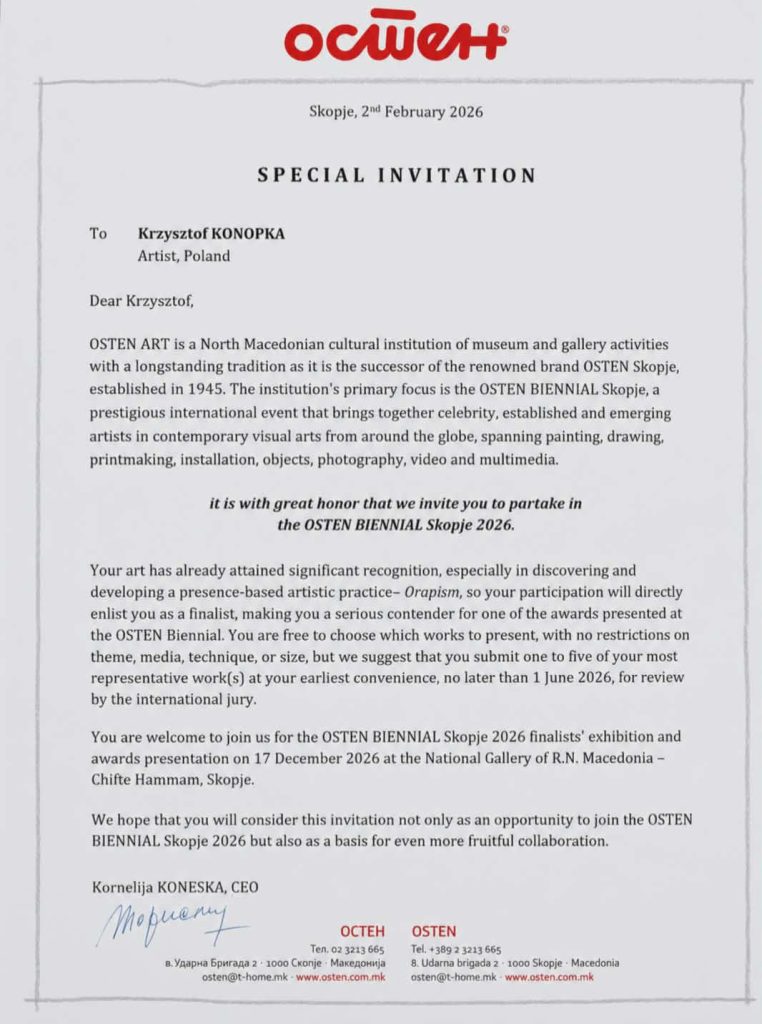
Krzysztof Konopka has been officially invited to participate in OSTEN Biennial Skopje 2026 — one of the longest-running and most recognized contemporary art events in Southeast Europe.
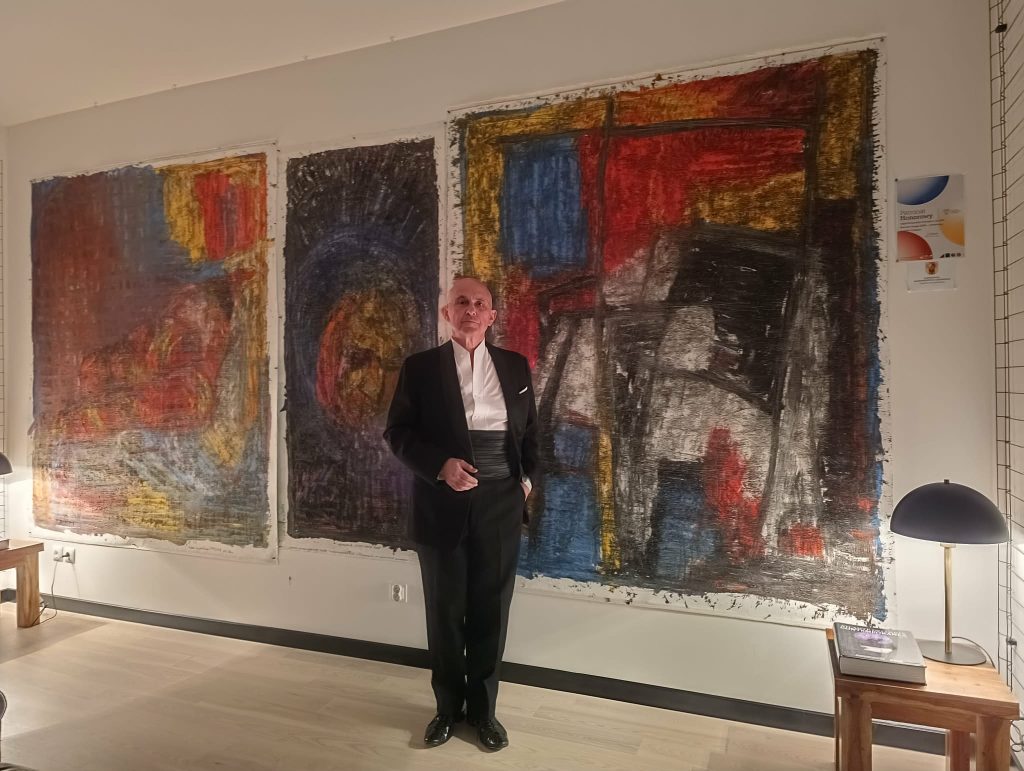
The presentation will feature a monumental ORAPIZM® triptych measuring 200 × 450 cm — a work developed through the language of presence, gesture, and the process of INACTION.
For decades, OSTEN Biennial Skopje has brought together artists from around the world, creating a space where different languages of contemporary art converge: painting, drawing, installation, photography, video, and multimedia. The official invitation extended to Krzysztof Konopka highlights the growing recognition of his presence-based painting practice — ORAPIZM®.
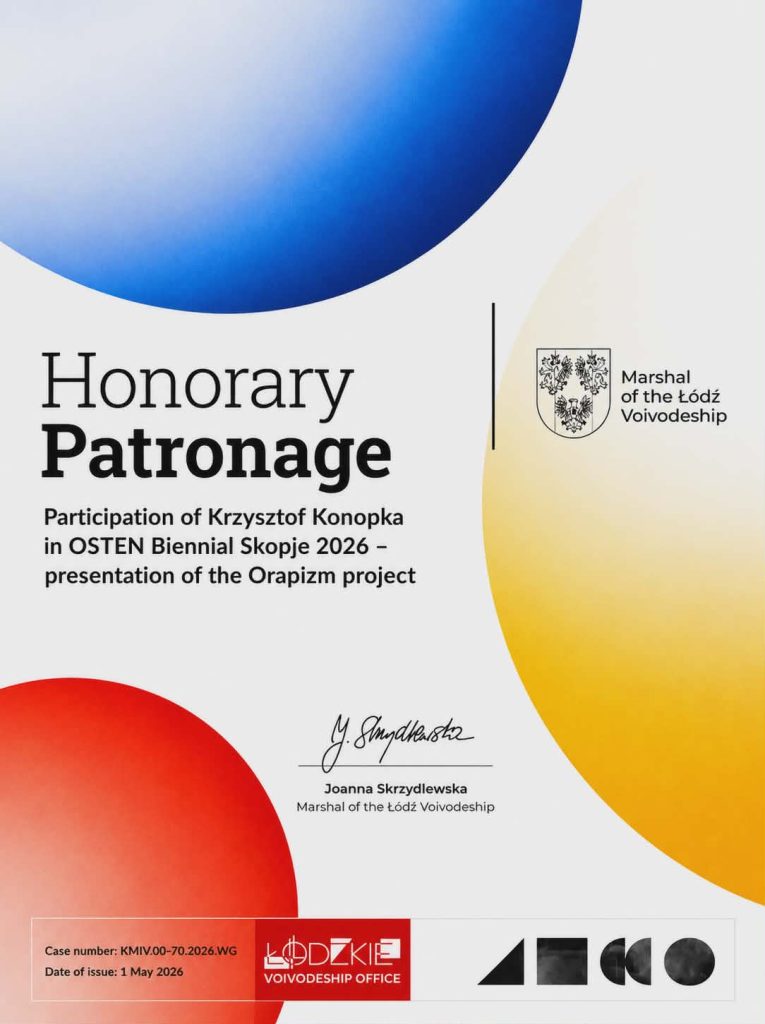
The project has been granted the Honorary Patronage of the Marshal of the Łódź Voivodeship, Joanna Skrzydlewska.
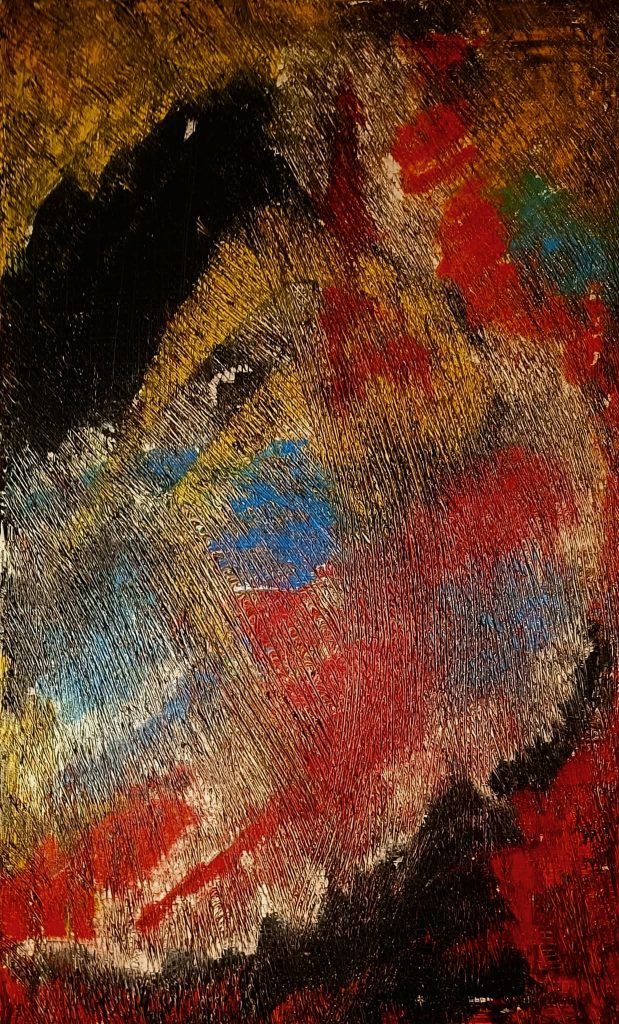
The triptych presented in Skopje continues the idea of the image as a space of presence — a place suspended between gesture, silence, and perception. In ORAPIZM®, the image is not merely a representation. It becomes an event of presence.
Honorary Patronage
Marshal of the Łódź Voivodeship Joanna Skrzydlewska
Official Invitation
OSTEN Biennial Skopje 2026 Skopje, North Macedonia
Krzysztof Konopka został oficjalnie zaproszony do udziału w międzynarodowym wydarzeniu artystycznym OSTEN Biennial Skopje 2026 — jednym z najdłużej istniejących i najbardziej rozpoznawalnych wydarzeń sztuki współczesnej w Europie Południowo-Wschodniej.
Prezentacja obejmie monumentalny tryptyk ORAPIZMU® o wymiarach 200 × 450 cm — pracę rozwijaną w duchu obecności, gestu i procesu INACJI.
OSTEN Biennial Skopje od dekad gromadzi artystów z całego świata, tworząc przestrzeń spotkania różnych języków sztuki współczesnej: malarstwa, rysunku, instalacji, fotografii, wideo i multimediów. Oficjalne zaproszenie skierowane do Krzysztofa Konopki podkreśla rozpoznawalność rozwijanej przez niego praktyki presence-based painting — ORAPIZM®.
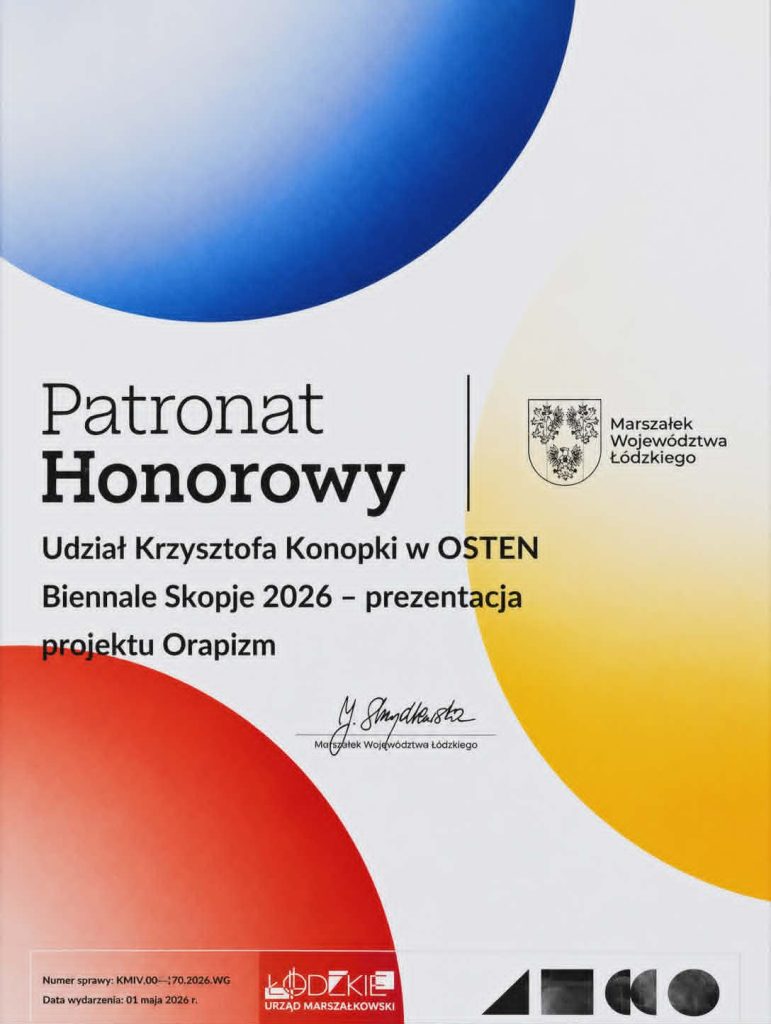
Projekt został objęty Honorowym Patronatem Marszałka Województwa Łódzkiego Joanny Skrzydlewskiej.
Tryptyk prezentowany w Skopje stanowi rozwinięcie idei obrazu jako przestrzeni obecności — miejsca pomiędzy gestem, ciszą i percepcją. W ORAPIZMIE® obraz nie jest jedynie przedstawieniem. Staje się zdarzeniem obecności.
Honorowy Patronat
Marszałek Województwa Łódzkiego Joanna Skrzydlewska
Oficjalne zaproszenie
OSTEN Biennial Skopje 2026 Skopje, North Macedonia
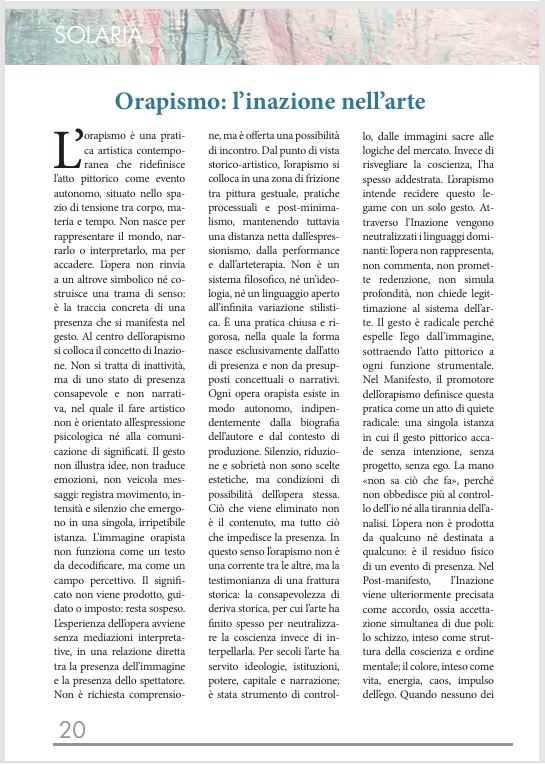
Don Pietro Jura, “Orapismo: l’inazione nell’arte”, a critical essay on Orapizm®, published in the international magazine Solaria (No. 26, February 2026), edited by Prince Alfio Borghese.
“Orapizm redefines the act of painting as an autonomous moment of tension between body, matter, and time.”
Source Solaria — Rivista Internazionale di Arte e Cultura No. 26, February 2026 pp. 20–21
Orapism is a contemporary artistic practice that redefines the act of painting as an autonomous moment of tension between body, matter, and time. It does not arise in order to narrate or interpret something, but to allow a process to occur. The work does not refer to another symbolic or conceptual meaning; rather, it is a concrete trace of presence that reveals itself in the gesture. At the center of Orapism lies the concept of ination. This does not mean inactivity, but a state of conscious, non-narrative activity – the moment in which artistic action is no longer directed toward psychological expression or the communication of meanings. The gesture does not illustrate an idea, does not transmit emotions, and does not function as a carrier of a message; it records movement and installs a silence from which the image emerges. The image thus becomes a perceptual event. It does not function like a text requiring interpretation, but like a field of perception. Meaning is neither produced nor interpreted – it remains suspended. The experience of the work takes place without interpretative mediation, in the direct relation between the presence of the image and the presence of the viewer. From the perspective of art history, Orapism situates itself within a space of tension between minimalism and processual practices, while maintaining a clear distance from the dominant languages of contemporary art. It is not a philosophical system nor a closed doctrine, but an open language that allows for different stylistic variations. Orapism does not emerge from conceptual or narrative premises. Each work is born autonomously, independent of the artist’s biography and the context of production. Silence, reduction, and concentration are not aesthetic decisions but conditions that make the image itself possible. Everything that could obscure its presence is removed. In this sense, Orapism is not a testimony of its era nor a historical commentary. It is rather a trace of a form of consciousness. Where art has often functioned as an instrument of ideology, power, or narrative, Orapism neutralizes these functions, restoring to the image its primordial capacity to awaken awareness. It does not propose salvation, nor does it promise transcendence. It does not demand deep interpretation either. Through the radical rejection of the image as representation and the removal of gesture as expression, it opens a space of silence in which the image ceases to be a depiction and becomes an experience. Within this space the artist is no longer an author in the traditional sense, but rather a passage through which the gesture moves. The viewer, in turn, does not interpret the image but resonates with it. The Orapist image is not a message – it is a form of presence. After an initial interest in the work of Jacek Malczewski, the Polish painter associated with the symbolism of the late nineteenth and early twentieth centuries, Krzysztof Konopka gradually abandoned stylistic references and developed an autonomous painting practice characterized by the rigor of gesture and a radical reduction of formal means. His works have been presented in numerous international group exhibitions (2017–2025), including in Amsterdam, London, Paris, Venice, Florence, and Vienna, as well as in solo exhibitions in Skopje (North Macedonia).
Don Pietro Jura, „Orapismo: l’inazione nell’arte”, krytyczny esej o Orapizmie®, opublikowany w międzynarodowym magazynie Solaria (nr 26, luty 2026), redagowanym przez księcia Alfio Borghese.
„Orapizm redefiniuje akt malarski jako autonomiczny moment napięcia pomiędzy ciałem, materią i czasem.”
Źródło Solaria — Międzynarodowy Magazyn Sztuki i Kultury nr 26, luty 2026 s. 20–21
Orapizm jest współczesną praktyką artystyczną, która redefiniuje akt malarski jako autonomiczny moment napięcia pomiędzy ciałem, materią i czasem. Nie powstaje po to, aby coś opowiadać lub interpretować, lecz aby pozwolić wydarzyć się procesowi. Dzieło nie odsyła do innego symbolicznego lub konceptualnego znaczenia, lecz jest konkretnym śladem obecności, która ujawnia się w geście. W centrum Orapizmu znajduje się pojęcie inacji. Nie oznacza ono bezczynności, lecz stan aktywności świadomej i nienarracyjnej – moment, w którym działanie artystyczne nie jest już ukierunkowane na ekspresję psychologiczną ani na komunikowanie znaczeń. Gest nie ilustruje idei, nie przekazuje emocji i nie służy jako nośnik przekazu; rejestruje ruch, instaluje ciszę, z której wyłania się obraz. Obraz staje się zatem zdarzeniem percepcyjnym. Nie funkcjonuje jak tekst wymagający odczytania, lecz jak pole percepcji. Znaczenie nie jest produkowane ani interpretowane – pozostaje zawieszone. Doświadczenie dzieła odbywa się bez mediacji interpretacyjnych, w bezpośredniej relacji między obecnością obrazu a obecnością widza. Z punktu widzenia historii sztuki Orapizm sytuuje się w przestrzeni napięcia pomiędzy minimalizmem a procesualnością, zachowując jednak wyraźny dystans wobec języków dominujących w sztuce współczesnej. Nie jest systemem filozoficznym ani zamkniętą doktryną, lecz otwartym językiem pozwalającym na różne wariacje stylistyczne. Orapizm nie powstaje z założeń konceptualnych czy narracyjnych. Każde dzieło rodzi się autonomicznie, niezależnie od biografii autora i kontekstu produkcji. Cisza, redukcja i koncentracja nie są decyzjami estetycznymi, lecz warunkiem możliwości samego obrazu. Usunięte zostaje wszystko, co mogłoby przesłonić jego obecność. W tym sensie Orapizm nie jest świadectwem epoki ani komentarzem historycznym. Jest raczej śladem formy świadomości. Tam, gdzie sztuka bywała narzędziem ideologii, władzy czy narracji, Orapizm neutralizuje te funkcje, przywracając obrazowi jego pierwotną zdolność budzenia świadomości. Nie proponuje zbawienia ani nie obiecuje transcendencji. Nie domaga się też głębokiej interpretacji. Przez radykalne odrzucenie obrazu jako reprezentacji i usunięcie gestu jako ekspresji, otwiera przestrzeń ciszy, w której obraz przestaje być przedstawieniem, a staje się doświadczeniem. W tej przestrzeni artysta nie jest już autorem w tradycyjnym sensie, lecz raczej miejscem przejścia gestu. Widz z kolei nie interpretuje obrazu, lecz z nim rezonuje. Obraz orapistyczny nie jest komunikatem – jest formą obecności. Po początkowym zainteresowaniu twórczością Jacka Malczewskiego, polskiego malarza reprezentującego symbolizm przełomu XIX i XX wieku, Krzysztof Konopka stopniowo porzucił odniesienia stylistyczne i wypracował autonomiczną praktykę malarską, charakteryzującą się rygorem gestu i radykalną redukcją środków formalnych. Jego prace były prezentowane na licznych wystawach zbiorowych w kontekstach międzynarodowych (2017–2025), m.in. w Amsterdamie, Londynie, Paryżu, Wenecji, Florencji i Wiedniu, a także na wystawach indywidualnych w Skopje (Macedonia).
Three people enter the water. Each moves differently. The difference does not lie in the style of movement, but in the way that movement is organized.
This metaphor allows us to grasp the essential distinction between conceptual art, art of expression, and Orapizm.
1. The Conceptual Swimmer — Movement According to a Plan
The first swimmer moves according to a predetermined goal. Direction and trajectory are established in advance. The movement executes a project.
This corresponds to conceptual art.
Structure: idea → realization → image
The gesture is the execution of an assumption. Meaning precedes action.
2. The Expressive Swimmer — Movement Organized by a Dominant State
The second swimmer does not follow a plan. His movement is organized by a dominant state — tension, intensity, arousal.
It is not about direction, but about force. The movement is shaped by what prevails at a given moment.
This corresponds to art of expression.
Structure: state → gesture → trace
The action becomes a recording of energy.
3. The Third Swimmer — Ination in Orapizm
The third swimmer moves differently.
He does not execute a plan. He does not act under the dominance of tension.
Movement occurs as a direct relation to what is happening in the present. It is not organized around a goal or a state.
At a certain point, it ceases to matter “who acts.” What remains is the event of movement itself.
This is the moment of Ination.
Orapizm: From Concept to Transcendence
Orapizm, as an artistic practice, begins with a concept.
The concept establishes a frame: theme, direction, structure. This is a narrative stage.
The act of Orapizm occurs only when the concept ceases to function as a controlling force.
It is not about demonstratively destroying the concept, but about transcending its dominance.
Only at this point does Ination become possible.
What Is Ination?
Ination is a state of pre-narrative presence in which the creative act occurs without constructing a story about the “self” as its center.
Narrative organizes experience around identity: “I did this,” “this is about me,” “this means.”
In conceptual art, narrative precedes the gesture. In expressive art, narrative arises as a result of the dominant state.
In Ination, the narrative center does not organize the action.
Movement continues. A trace emerges. No story is constructed.
This does not imply a lack of consciousness. It implies the suspension of the dominance of the identity-forming mechanism.
Technique and Act
Orapizm possesses a specific technique and method of working with material.
However, the technique alone may lead to:
formal abstraction,
expressionism,
performance,
conceptual realization,
an aesthetic of gesture.
It may generate dynamic images and intense structures.
This still does not mean that the act of Orapizm has occurred.
The act of Orapizm takes place exclusively when Ination appears.
Without Ination, a painting executed using the technique of Orapizm is produced. With Ination, the act of Orapizm occurs.
The difference is structural, not stylistic.
The Difference at a Glance
Conceptual
Expressive
Ination in Orapizm
Point of departure
Idea
Dominant state
Transcendence of the narrative center
Movement
Execution of a plan
Organized by tension
Event without a center
Meaning
Intended
Emerging from the state
Non-imposed
Returning to the River
The first swimmer organizes movement around a plan. The second organizes movement around a dominant state.
In both cases, action has a center that gives it direction.
The third does not organize movement around a plan or a state. The movement is not controlled by project or tension. It does not concentrate around someone who governs it.
The event occurs.
The trace remains.
Not as the execution of a plan. Not as a record of tension.
But as the result of Ination — a state of pre-narrative presence in which the creative act unfolds without constructing a narrative center.
Editorial Note
Orapizm® is a registered name designating an original artistic practice defined as a process leading to Ination — a pre-narrative form of presence within the creative act.
Do wody wchodzą trzy osoby. Każda porusza się inaczej. Różnica nie dotyczy stylu ruchu, lecz sposobu jego organizacji.
Ta metafora pozwala uchwycić zasadniczą różnicę między sztuką koncepcyjną, sztuką ekspresji a Orapizmem.
1. Pływak koncepcyjny — ruch według planu
Pierwszy porusza się według założonego celu. Kierunek i trajektoria są ustalone wcześniej. Ruch realizuje projekt.
To odpowiednik sztuki koncepcyjnej.
Struktura: idea → realizacja → obraz
Gest jest wykonaniem założenia. Sens poprzedza działanie.
2. Pływak ekspresyjny — ruch organizowany przez dominujący stan
Drugi nie realizuje planu. Jego ruch organizuje dominujący stan — napięcie, intensywność, pobudzenie.
Nie chodzi o kierunek, lecz o siłę. Ruch jest kształtowany przez to, co w danym momencie przeważa.
To odpowiednik sztuki ekspresji.
Struktura: stan → gest → ślad
Działanie przybiera formę zapisu energii.
3. Trzeci pływak — Inacja w Orapizmie
Trzeci porusza się inaczej.
Nie realizuje planu. Nie działa pod dominacją napięcia.
Ruch zachodzi jako bezpośrednia relacja z tym, co aktualnie się wydarza. Nie organizuje się wokół celu ani stanu.
W pewnym momencie przestaje być istotne „kto działa”. Pozostaje samo zdarzenie ruchu.
To moment Inacji.
Orapizm: od konceptu do przekroczenia
Orapizm jako praktyka artystyczna rozpoczyna się od konceptu.
Koncept ustanawia ramę: temat, kierunek, strukturę. Jest to etap narracyjny.
Akt Orapizmu zachodzi dopiero wtedy, gdy koncept przestaje pełnić funkcję sterującą.
Nie chodzi o jego demonstracyjne zniszczenie, lecz o przekroczenie jego dominacji.
Dopiero w tym momencie możliwa jest Inacja.
Czym jest Inacja?
Inacja to stan przednarracyjnej obecności, w którym akt twórczy zachodzi bez budowania historii o „ja” jako jego centrum.
Narracja organizuje doświadczenie wokół tożsamości: „ja zrobiłem”, „to jest o mnie”, „to znaczy”.
W sztuce koncepcyjnej narracja poprzedza gest. W sztuce ekspresyjnej narracja powstaje w wyniku dominującego stanu.
W Inacji narracyjne centrum nie organizuje działania.
Ruch trwa. Ślad powstaje. Nie powstaje opowieść.
Nie oznacza to braku świadomości. Oznacza zawieszenie dominacji mechanizmu tożsamościowego.
Technika a akt
Orapizm posiada określoną technikę i sposób pracy z materią.
Jednak sama technika może prowadzić do:
abstrakcji formalnej,
ekspresjonizmu,
performansu,
realizacji koncepcyjnej,
estetyki gestu.
Może generować dynamiczne obrazy i intensywne struktury.
To wciąż nie oznacza, że zachodzi akt Orapizmu.
Akt Orapizmu zachodzi wyłącznie wtedy, gdy pojawia się Inacja.
Bez Inacji powstaje obraz wykonany techniką Orapizmu. Z Inacją powstaje akt Orapizmu.
To różnica strukturalna, nie stylistyczna.
Różnica w jednym spojrzeniu
Koncepcyjne
Ekspresyjne
Inacja w Orapizmie
Punkt wyjścia
Idea
Dominujący stan
Przekroczenie narracyjnego centrum
Ruch
Realizacja planu
Organizowany przez napięcie
Zdarzenie bez centrum
Sens
Zamierzony
Wynikający ze stanu
Nienarzucany
Powrót do rzeki
Pierwszy pływak organizuje ruch wokół planu. Drugi organizuje ruch wokół dominującego stanu.
W obu przypadkach działanie ma centrum, które nadaje mu kierunek.
Trzeci nie organizuje się wokół planu ani wokół stanu. Ruch nie jest sterowany ani projektem, ani napięciem. Nie koncentruje się wokół „kogoś”, kto nim zarządza.
Zdarzenie zachodzi.
Ślad pozostaje.
Nie jako realizacja planu. Nie jako zapis napięcia.
Jako rezultat Inacji — stanu przednarracyjnej obecności, w którym akt twórczy zachodzi bez budowania narracyjnego centrum.
Nota redakcyjna Orapizm® stanowi zarejestrowaną nazwę autorskiej praktyki artystycznej, definiowanej jako proces prowadzący do Inacji — przednarracyjnej formy obecności w akcie twórczym.
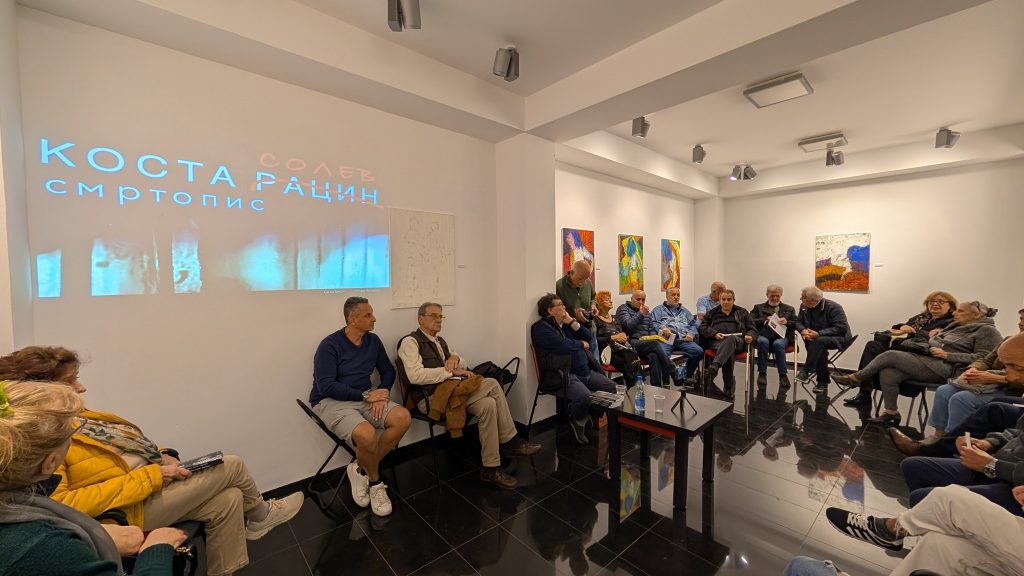
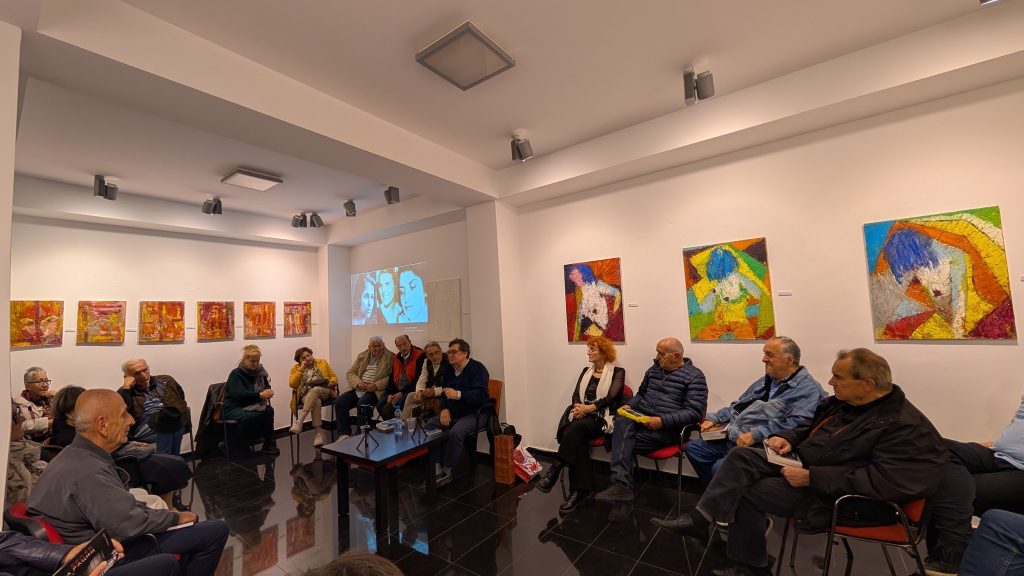
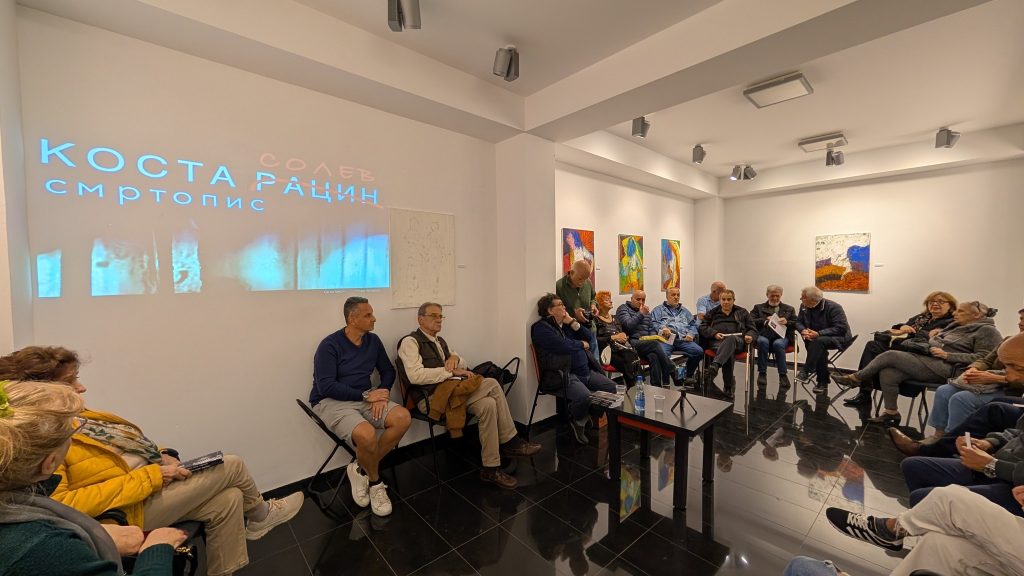
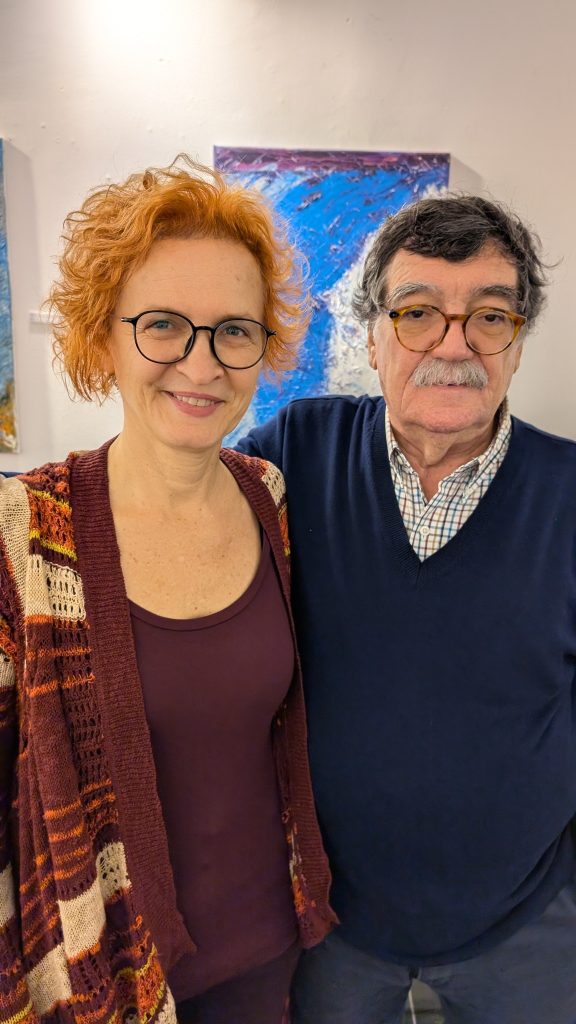
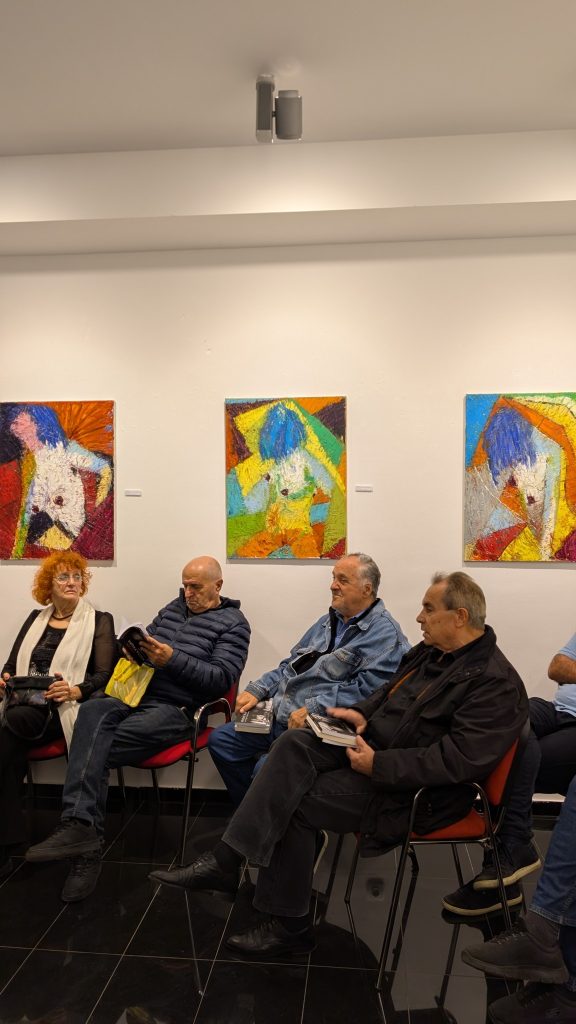
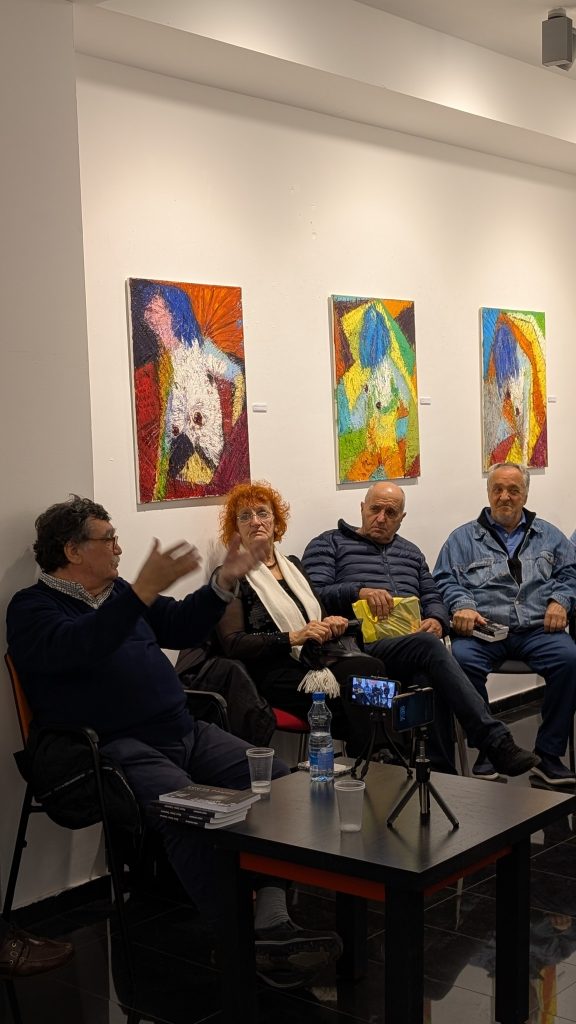
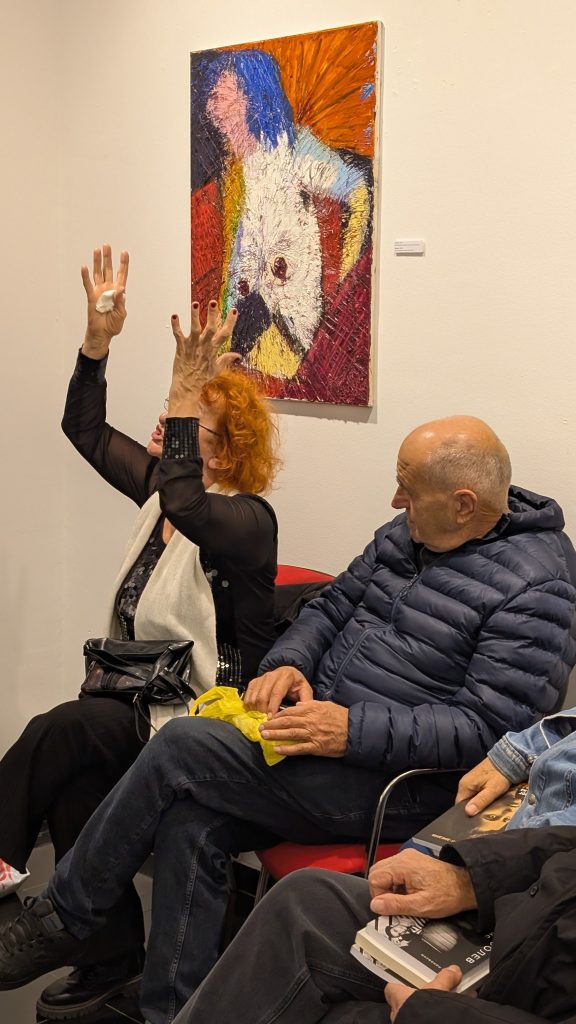
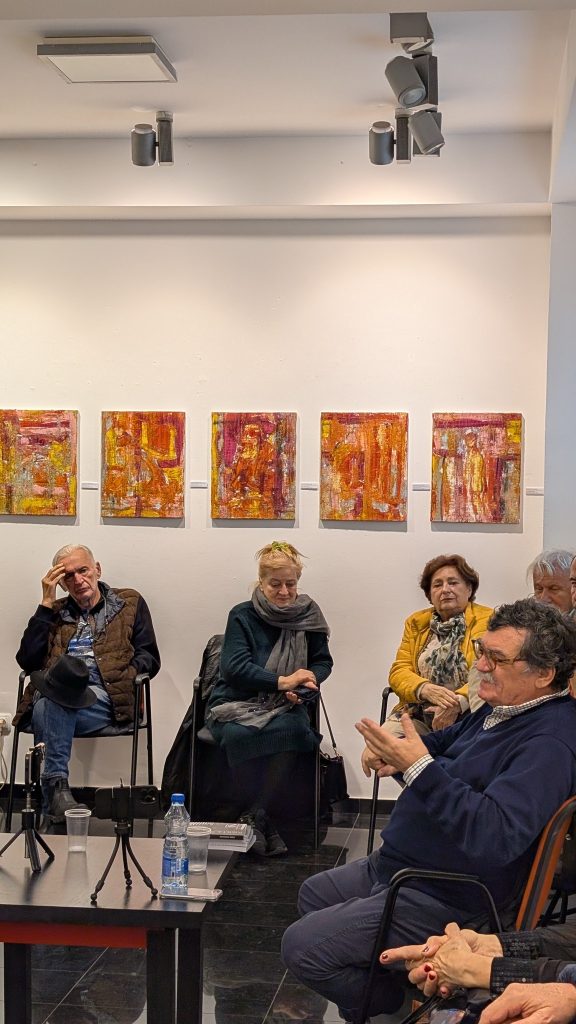
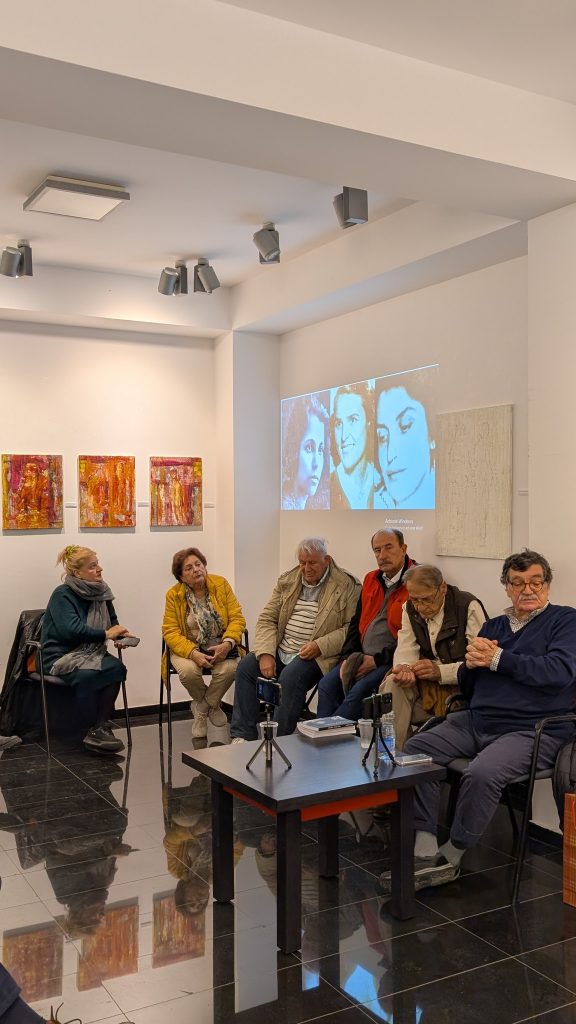
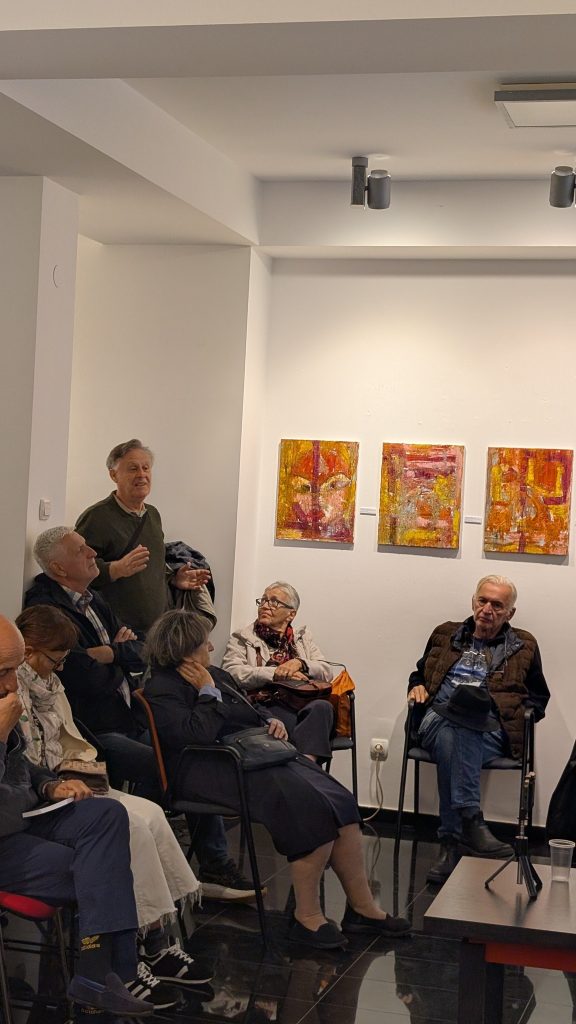
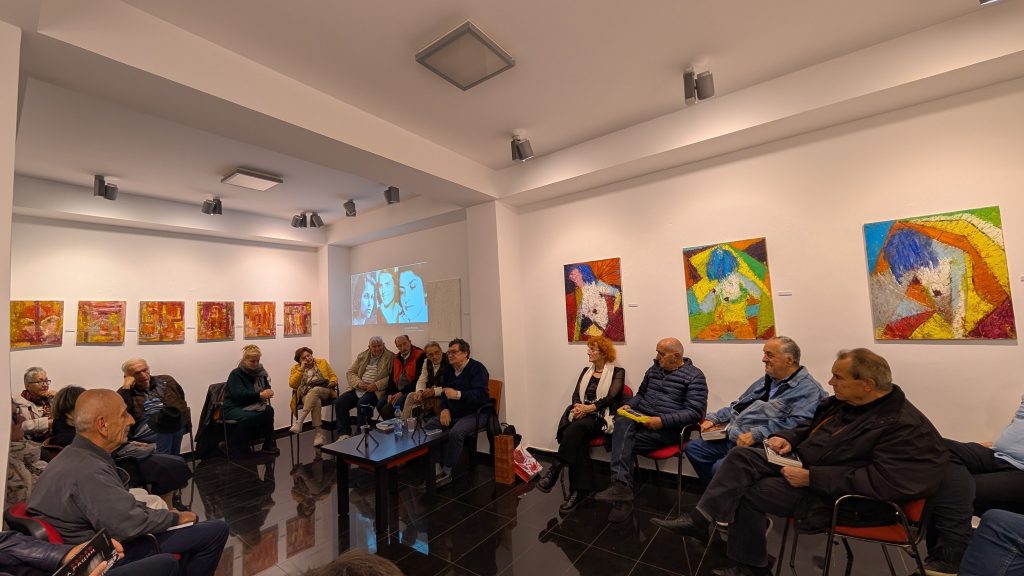
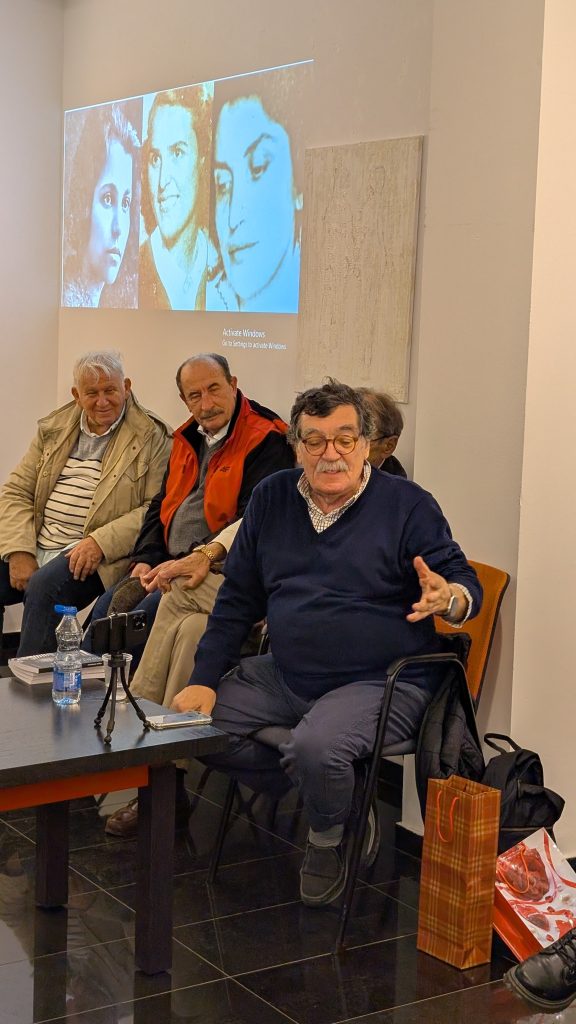
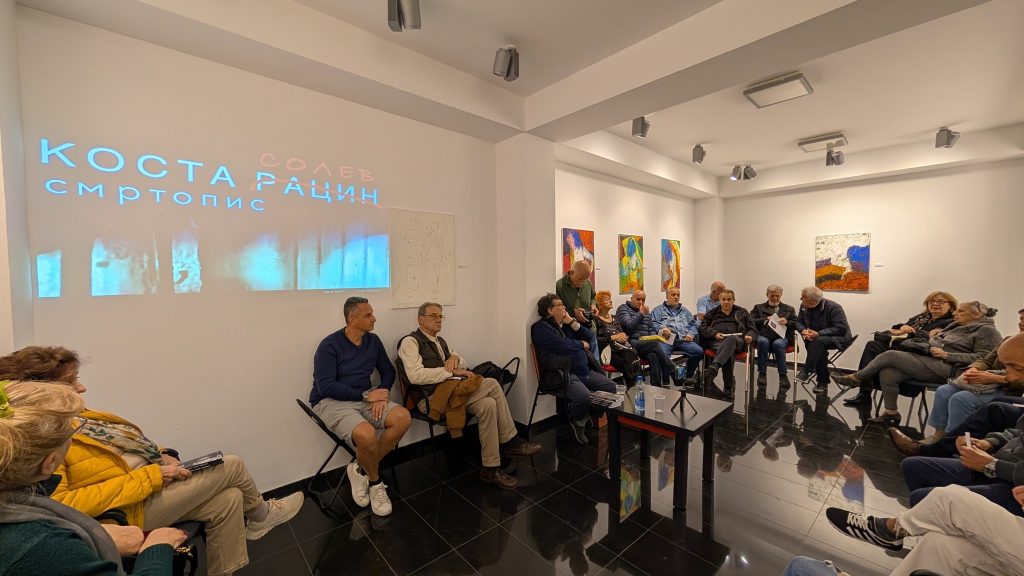
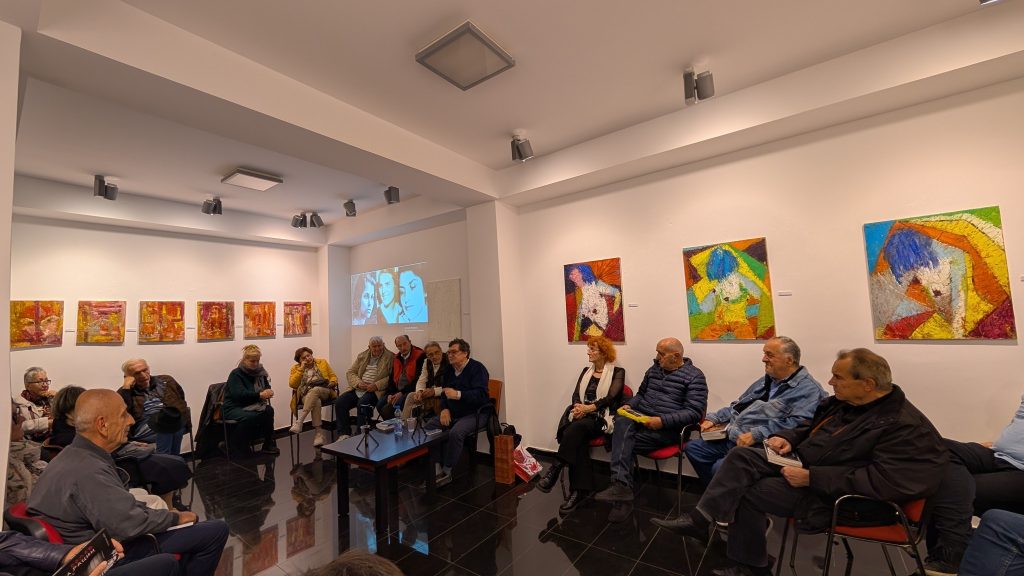
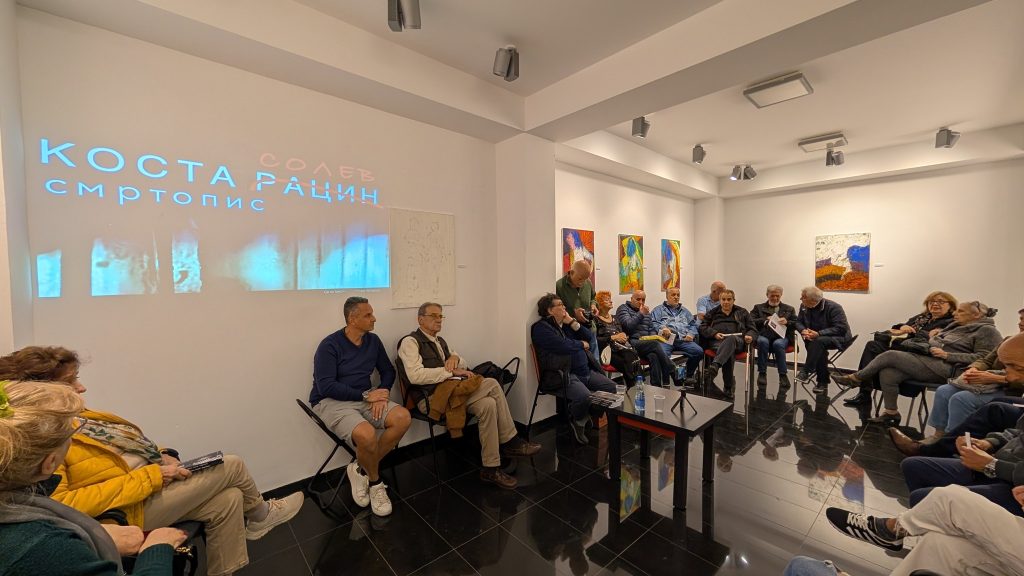
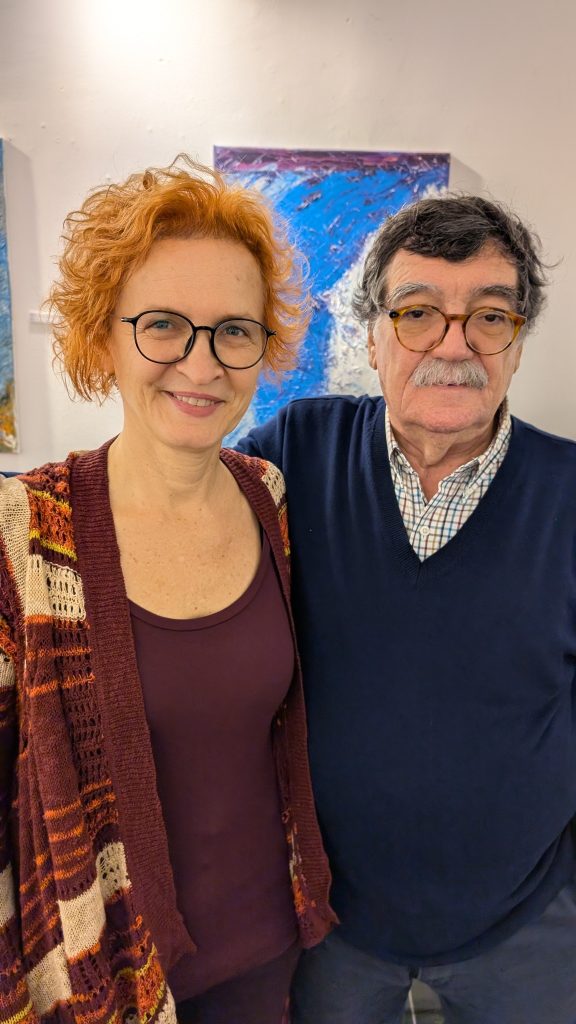
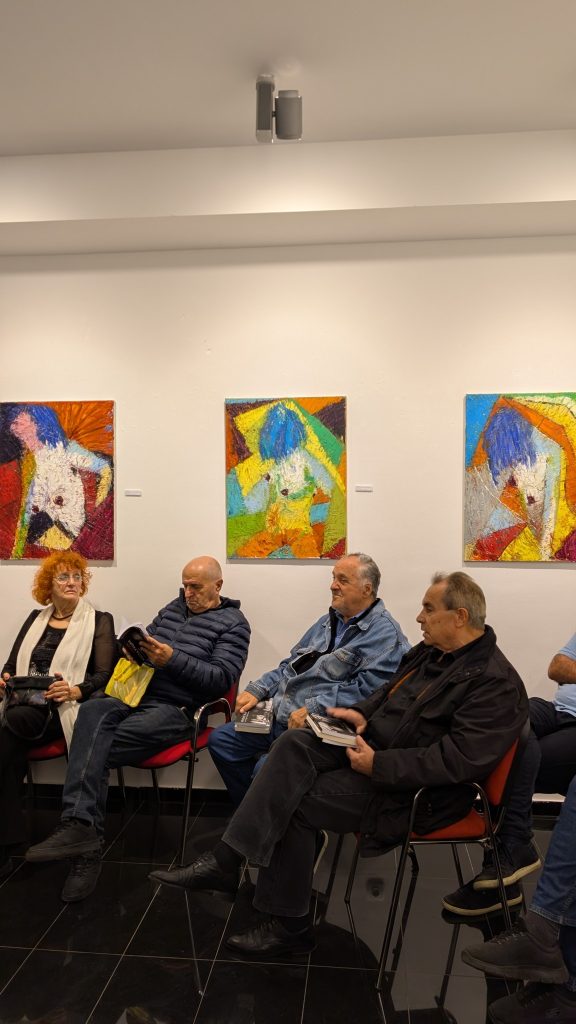
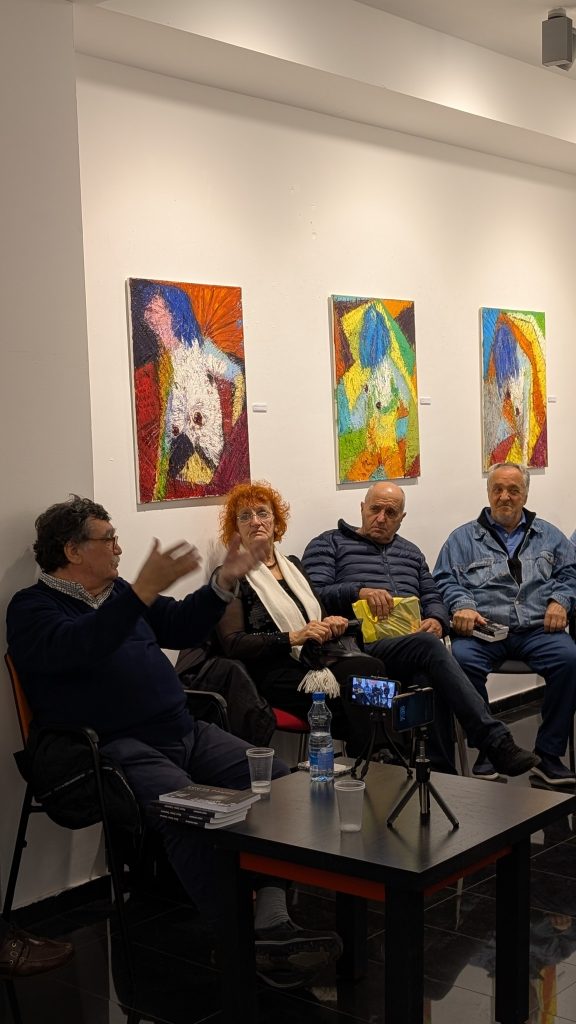
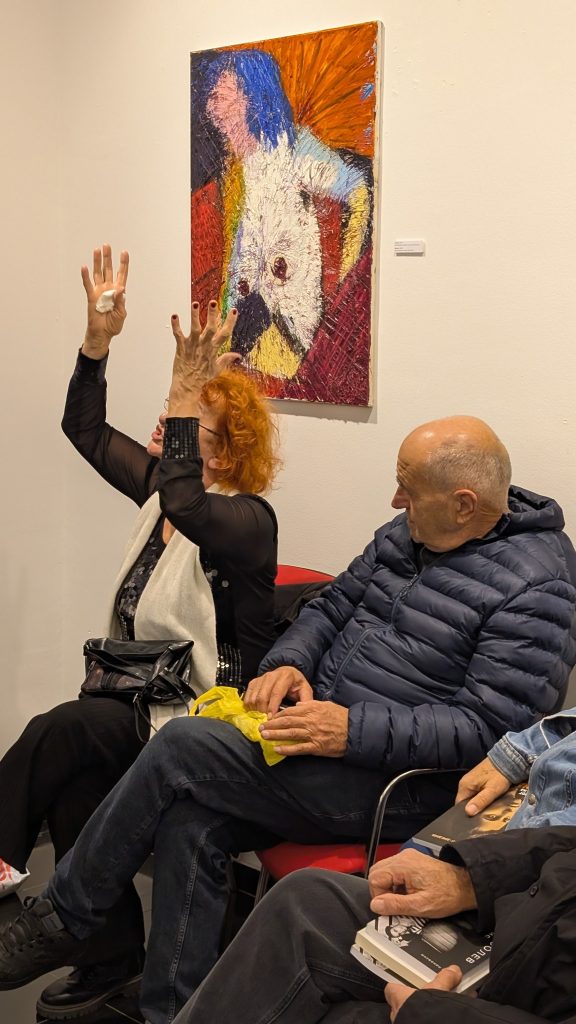
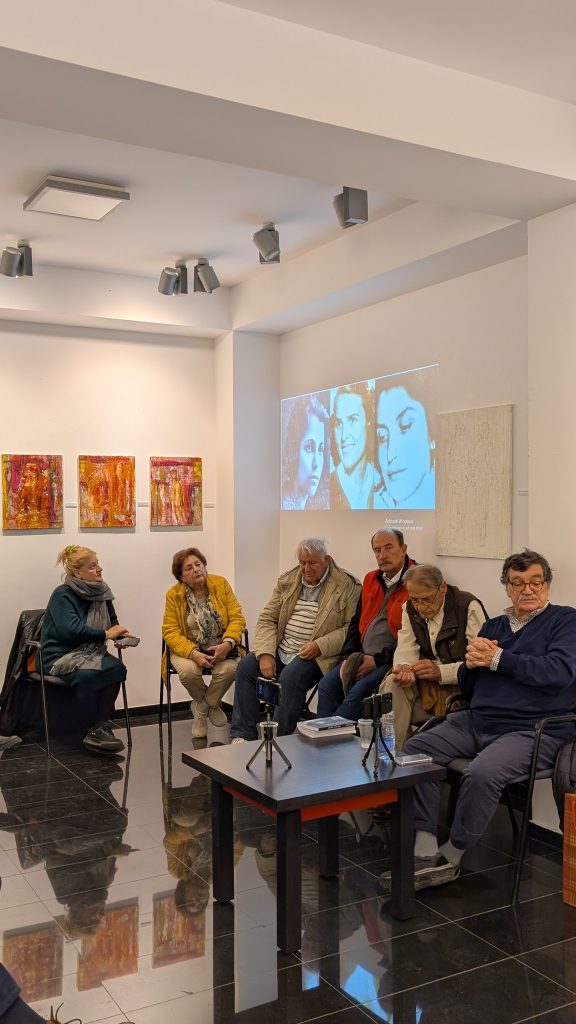
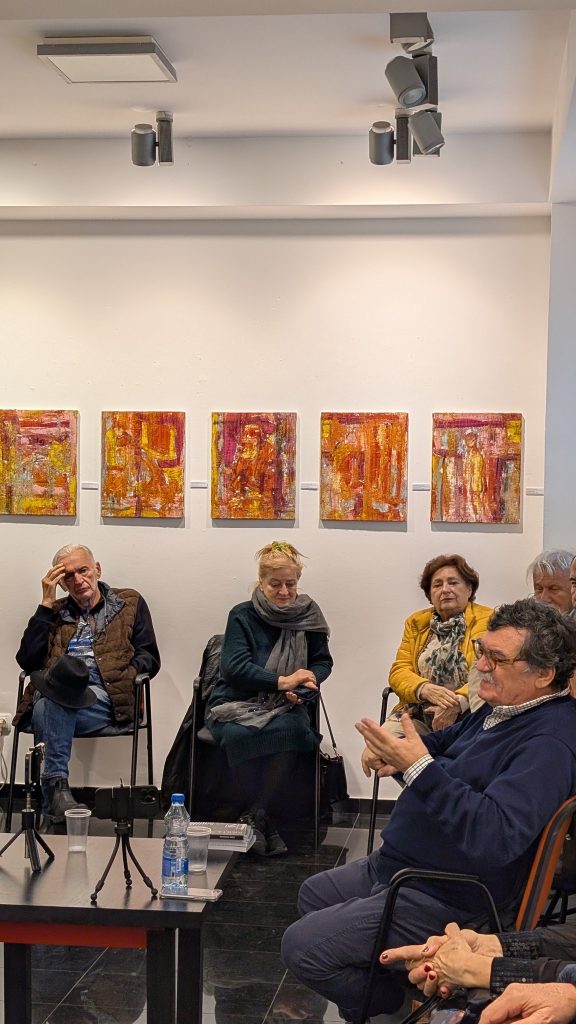
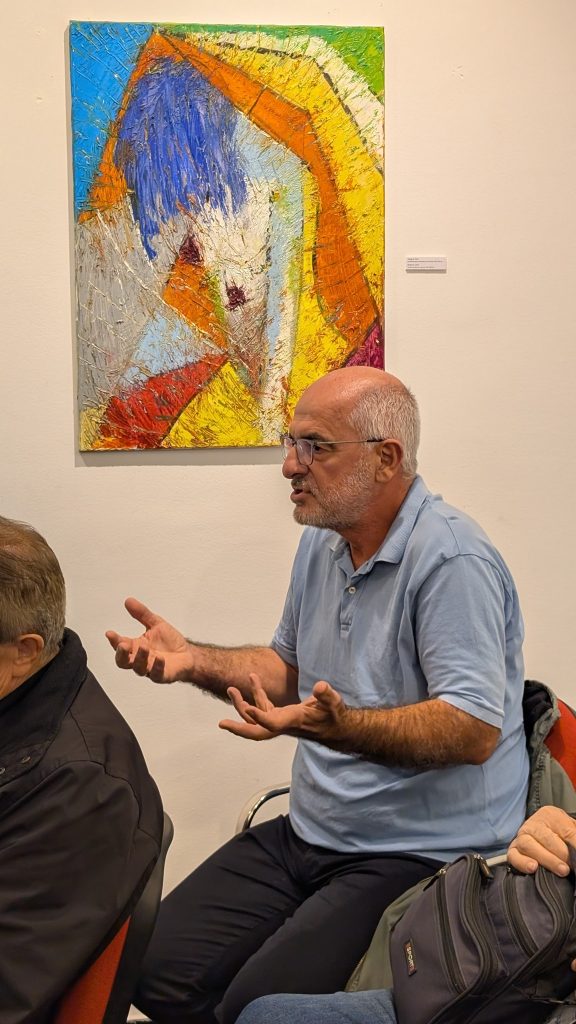
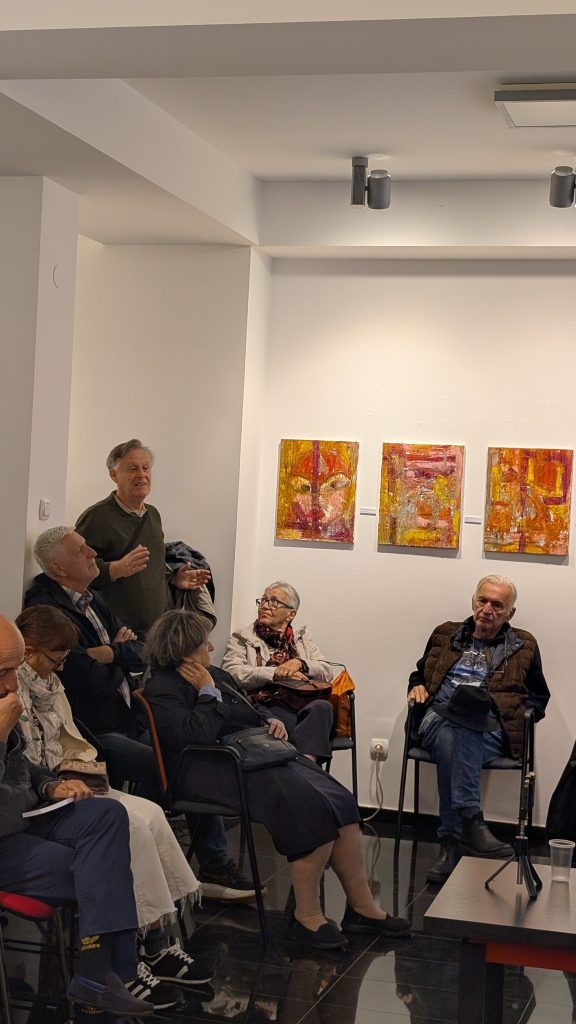
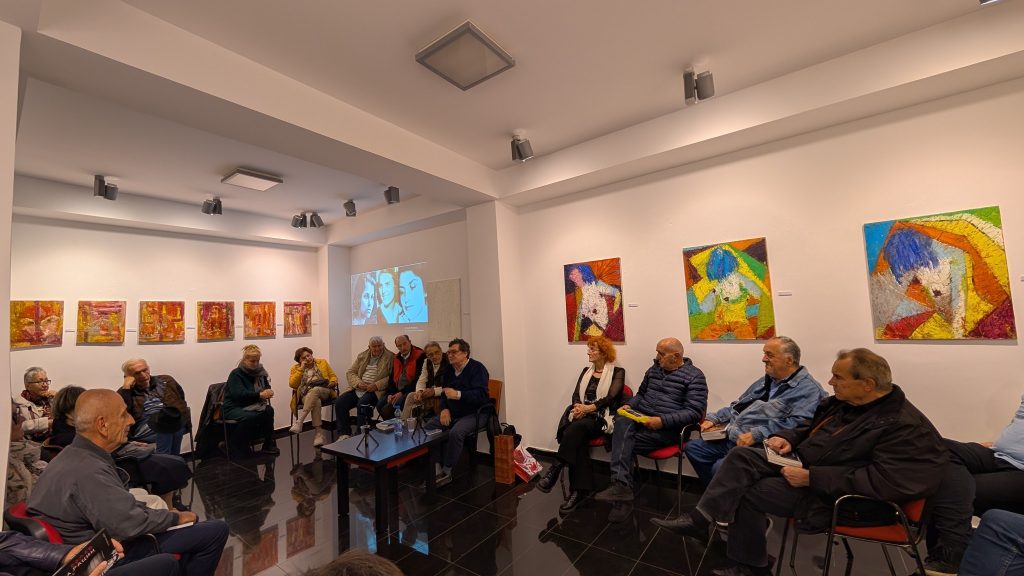
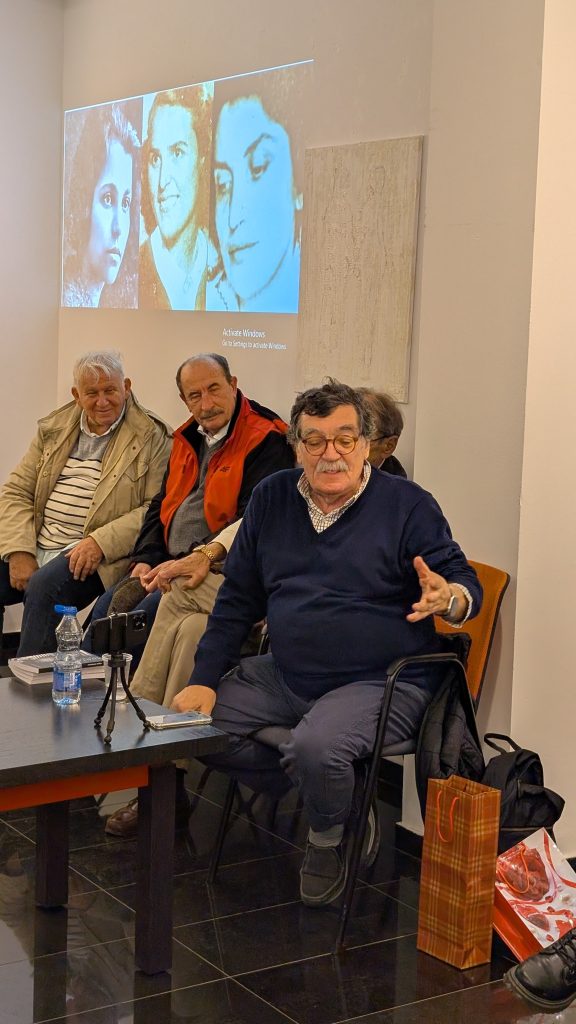
On Thursday evening (October 9, 2025), in the space of OSTEN Gallery, a meeting took place with renowned director and writer Naum Panovski, author of the book “Коста Солев – Смртопис.” The event was held in the presence of Kornelija Koneska, curator of the exhibition and Art Director of OSTEN Gallery, and Mice Jankulovski, Director of the Gallery and President of the OSTEN Biennale of Drawing.
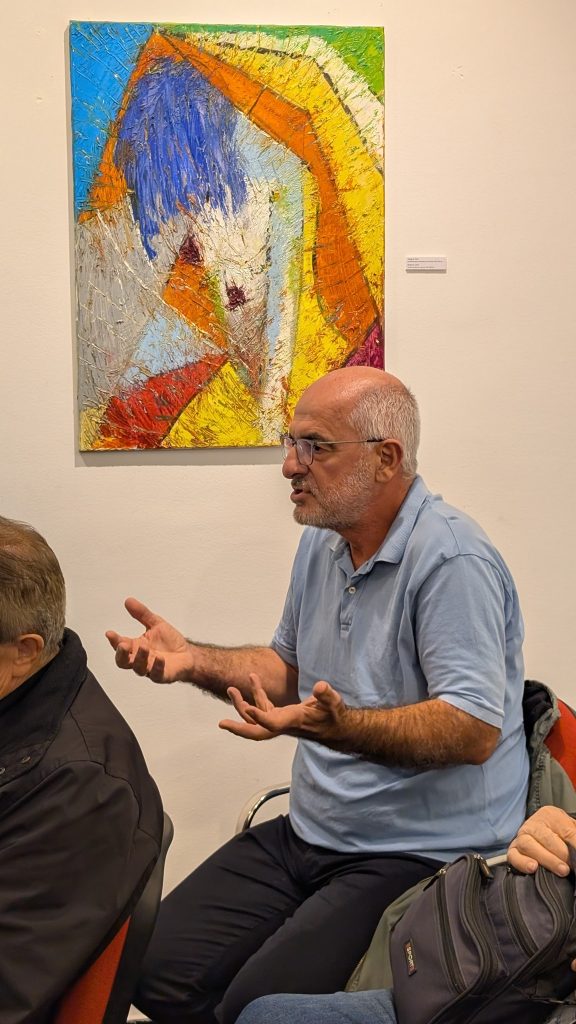
Naum Panovski – a Macedonian theatre director, essayist, and art theorist who has also worked for many years in the United States – shared reflections on the life and legacy of the poet Kosta Solev, whom he describes as “the voice of a small nation with a great soul.” The gathering took place among the paintings of the exhibition “ORAPISM – The Art of Ination” by Krzysztof Konopka (Orapista), on view in Skopje from 2 to 22 October 2025.
Where the silence of painting met the power of the word, a shared dimension of presence emerged — the essence of Orapism itself.
As Kornelija Koneska wrote: “The written word met visual art – in the beautiful atmosphere of the Orapism exhibition.”
W przestrzeni Galerii OSTEN w czwartkowy wieczór (09.10.2025 r.) odbyło się spotkanie z wybitnym reżyserem i pisarzem Naumem Panovskim, autorem książki „Коста Солев – Смртопис”. Wydarzenie miało miejsce w obecności Kornelii Koneskiej, kuratorki wystawy i dyrektorki artystycznej OSTEN Gallery, oraz Mice Jankulovskiego, dyrektora galerii i prezesa OSTEN Biennale of Drawing.
Naum Panovski – macedoński reżyser teatralny, eseista i teoretyk sztuki, od wielu lat tworzący również w Stanach Zjednoczonych – podjął w swojej książce temat życia i twórczości poety Kosty Soleva, którego określa jako „głos małego narodu o wielkiej duszy”. Spotkanie odbyło się wśród obrazów z wystawy „ORAPIZM – Sztuka Inacji” autorstwa Krzysztofa Konopki (Orapisty), prezentowanej w Skopje w dniach 2–22 października 2025.
Tam, gdzie cisza malarstwa spotkała się z mocą słowa, pojawił się wspólny wymiar obecności – ten sam, który stanowi serce Orapizmu.
Jak napisała Kornelija Koneska: „Pisane słowo spotkało się ze sztuką wizualną – w pięknej atmosferze wystawy Orapizmu.”